
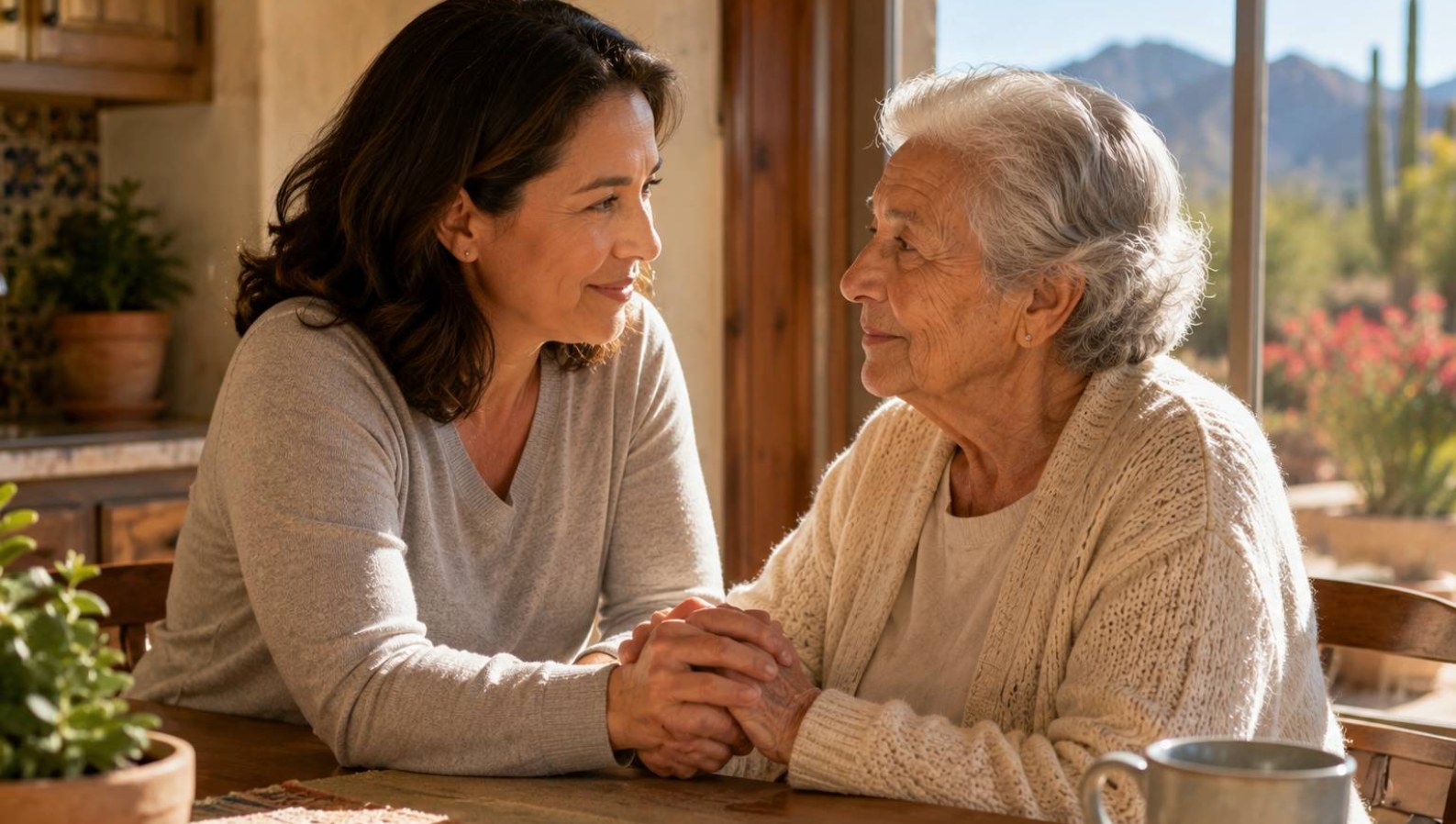
Forgetting a name or misplacing the car keys is a normal part of getting older. But some memory and thinking changes go beyond ordinary aging—and recognizing them early can make an enormous difference. When dementia is identified sooner, families in Tucson and across Southern Arizona have more time to plan, access treatment that may slow symptoms, and put support in place while their loved one can still take part in decisions.
Here are the early signs of dementia that families should never brush aside, along with how to tell them apart from normal aging.
Dementia is not a normal part of aging
Dementia isn’t a single disease but a group of symptoms—affecting memory, thinking, language, and judgment—caused by conditions such as Alzheimer’s disease. While the risk rises with age, dementia itself is not an inevitable part of growing older. That distinction matters, because writing off real warning signs as “just getting old” can delay help that makes a difference.
Early warning signs to watch for
No single sign confirms dementia, but a pattern of several—especially changes that interfere with daily life—deserves a doctor’s evaluation.
- Memory loss that disrupts daily life. Forgetting recently learned information, important dates, or asking the same questions over and over.
- Difficulty with familiar tasks. Struggling to follow a favorite recipe, manage a budget, or operate the TV remote.
- Confusion with time or place. Losing track of dates and seasons, or forgetting how they got somewhere.
- Trouble with words. Pausing mid-sentence, calling things by the wrong name, or struggling to follow conversations.
- Misplacing things in odd places. Putting the remote in the fridge, and being unable to retrace steps to find it.
- Poor judgment. New trouble with money, falling for scams, or neglecting grooming and hygiene.
- Withdrawal. Pulling away from hobbies, work projects, or social activities they used to enjoy.
- Mood and personality changes. Becoming confused, suspicious, anxious, or easily upset, especially in unfamiliar settings.
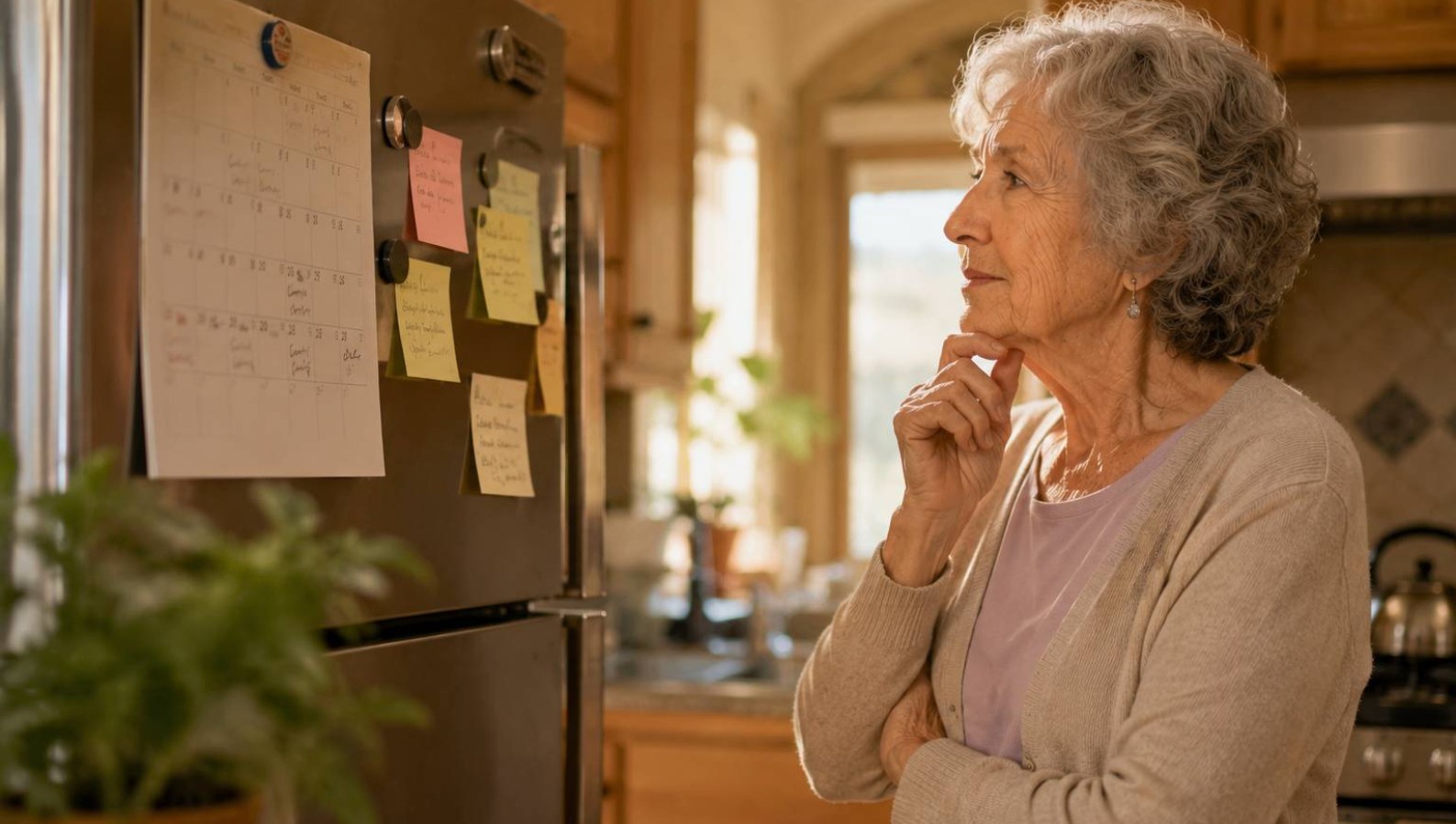
Normal aging or something more?
The difference often comes down to degree and impact. Occasionally forgetting a name and remembering it later is typical; regularly forgetting the names of close family members is not. Sometimes needing help with a new device is normal; being unable to manage tasks you’ve done for decades is a red flag. When memory changes begin to interfere with independence and safety, it’s time to talk with a physician.
What to do if you notice the signs
Start by keeping a simple log of what you observe and when. Encourage a visit to the doctor, who can rule out reversible causes—like medication side effects, thyroid issues, or vitamin deficiencies—and refer to a specialist if needed. Approach your loved one with patience and compassion; fear and denial are common, so lead with love rather than alarm. Our dementia care tips for families can help you navigate those first conversations.
How in-home memory care helps
Many people with early or moderate dementia can continue living safely at home with the right support. Trained caregivers provide structure and gentle routines, help with daily tasks, ensure safety, and offer the patient companionship that reduces anxiety. Copper Star’s in-home dementia care is designed to keep loved ones comfortable and engaged in familiar surroundings across Tucson and the surrounding communities.
Frequently asked questions
At what point should we see a doctor?
If you notice several of these signs, or any change that affects safety or daily independence, schedule an evaluation. Earlier is better.
Can these signs be caused by something other than dementia?
Yes. Medication side effects, infections, depression, thyroid problems, and vitamin deficiencies can mimic dementia and are sometimes reversible—another reason to get a proper evaluation.
Can someone with dementia still live at home?
Often yes, especially in earlier stages, with home safety measures and in-home support that can grow as needs change.
How do we start memory care in Tucson?
Begin with a free in-home assessment to understand your loved one’s needs and build a care plan.
Concerned about a loved one’s memory?
Trust your instincts—early action gives your family the most options. Contact Copper Star Home Care or call (520) 703-0064 to talk about compassionate memory care at home in Tucson and Southern Arizona.